Marrakech to Merzouga: Complete Route and Travel Guide
The journey from Marrakech to Merzouga is one of Morocco’s great overland adventures. In less than 600 kilometres, the landscape changes from the red walls of Marrakech to high mountain passes, ancient kasbahs, dramatic gorges, palm-filled valleys, and the wide golden dunes of the Sahara.
You cross the High Atlas Mountains, visit the UNESCO-listed kasbah of Aït Ben Haddou, follow the Road of a Thousand Kasbahs, and arrive in Merzouga in time to watch the desert light change across the Erg Chebbi dunes.
This guide explains what the journey is really like, where to stop, how many days you need, and how to choose between a private tour, a shared trip, and driving yourself.
Quick Answer
The direct drive from Marrakech to Merzouga takes approximately 9 to 10 hours and covers around 560 kilometres. However, driving the entire route in one day is not recommended.
Most travelers take two or three days, with overnight stops in Ouarzazate or the Dades Valley. Three days is the most practical option if you want to enjoy Aït Ben Haddou, Todra Gorge, and the Sahara without spending the entire trip in the car.
Marrakech to Merzouga at a Glance
| Day | Route | Main stops | Overnight |
|---|---|---|---|
| Day 1 | Marrakech → Dades Valley | High Atlas Mountains, Aït Ben Haddou, Ouarzazate | Dades Valley |
| Day 2 | Dades Valley → Merzouga | Todra Gorge, Erfoud, Erg Chebbi | Merzouga or desert camp |
| Day 3 | Merzouga → Marrakech or Fès | Sunrise in the Sahara, desert activities, onward journey | — |
This is the classic three-day route used by many travelers and tour operators. It offers a good balance between driving time and time spent exploring.
It is not the only possible itinerary, but it is one of the most comfortable ways to reach Merzouga from Marrakech.
Day 1: Marrakech to the Dades Valley
Crossing the High Atlas Mountains
The journey begins by heading south from Marrakech toward the High Atlas Mountains. The road climbs steadily through mountain villages and winding valleys before reaching the Tizi n’Tichka Pass at approximately 2,260 metres above sea level.
The pass is the highest major road crossing in Morocco. Along the way, there are several viewpoints where you can stop for photographs and enjoy the changing scenery.
The road can be winding, so the journey is best taken at a relaxed pace. Weather and traffic conditions may also affect travel times, particularly during winter.
Aït Ben Haddou
After crossing the mountains, the route continues toward Aït Ben Haddou, one of Morocco’s most famous fortified villages.
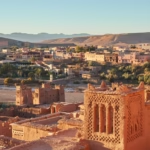
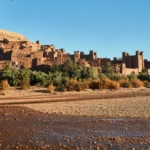
This historic ksar is built from earthen clay and has been listed as a UNESCO World Heritage Site since 1987. Its narrow lanes, towers, and traditional architecture have also appeared in films and television productions, including Gladiator and Game of Thrones.
The best way to experience Aït Ben Haddou is on foot. Walk across the old entrance and explore the narrow passages between the buildings before stopping to admire the views from higher up in the ksar.
Ouarzazate
A short drive from Aït Ben Haddou brings you to Ouarzazate, often known as the gateway to the desert.
The city is also associated with Morocco’s film industry. The Atlas Film Studios are located nearby and may be of interest to visitors who enjoy film history. Many itineraries stop in Ouarzazate for lunch or a short break before continuing toward the Dades Valley.
The Dades Valley
The final part of the day follows the Road of a Thousand Kasbahs through the Skoura palm oasis and the Valley of Roses.
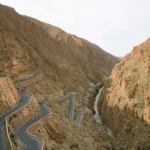
By late afternoon, the landscape becomes more dramatic as the road enters the Dades Valley. The area is known for its red cliffs, winding roads, traditional kasbahs, and distinctive rock formations, including the famous Monkey Fingers.
The Dades Valley is a comfortable place to spend the night before continuing toward the Sahara the following morning.
Day 2: Dades Valley to Merzouga
Todra Gorge
The day usually begins with a visit to Todra Gorge, one of the most impressive natural landscapes in southern Morocco.
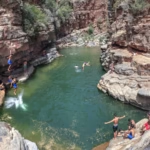
At its narrowest point, tall limestone cliffs rise on both sides of the road and riverbed. The gorge is a popular place for a short walk, photographs, and a peaceful morning stop.
Visiting earlier in the day often means cooler temperatures and softer light, although the exact timing depends on your itinerary.
Erfoud and the Desert Landscape
After Todra Gorge, the route continues east through increasingly open landscapes.
The journey passes through Erfoud, a town known for its fossils and fossil workshops. The surrounding area was once covered by an ancient sea, and fossils found in the region are often polished into decorative objects and furniture.
A short stop in Erfoud can be interesting for visitors curious about local geology and crafts.
Arriving in Merzouga
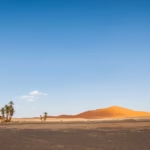
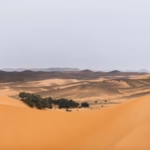
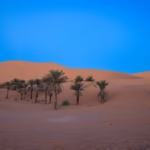
As you approach Merzouga, the landscape changes again. The flat desert plains give way to the orange dunes of Erg Chebbi.
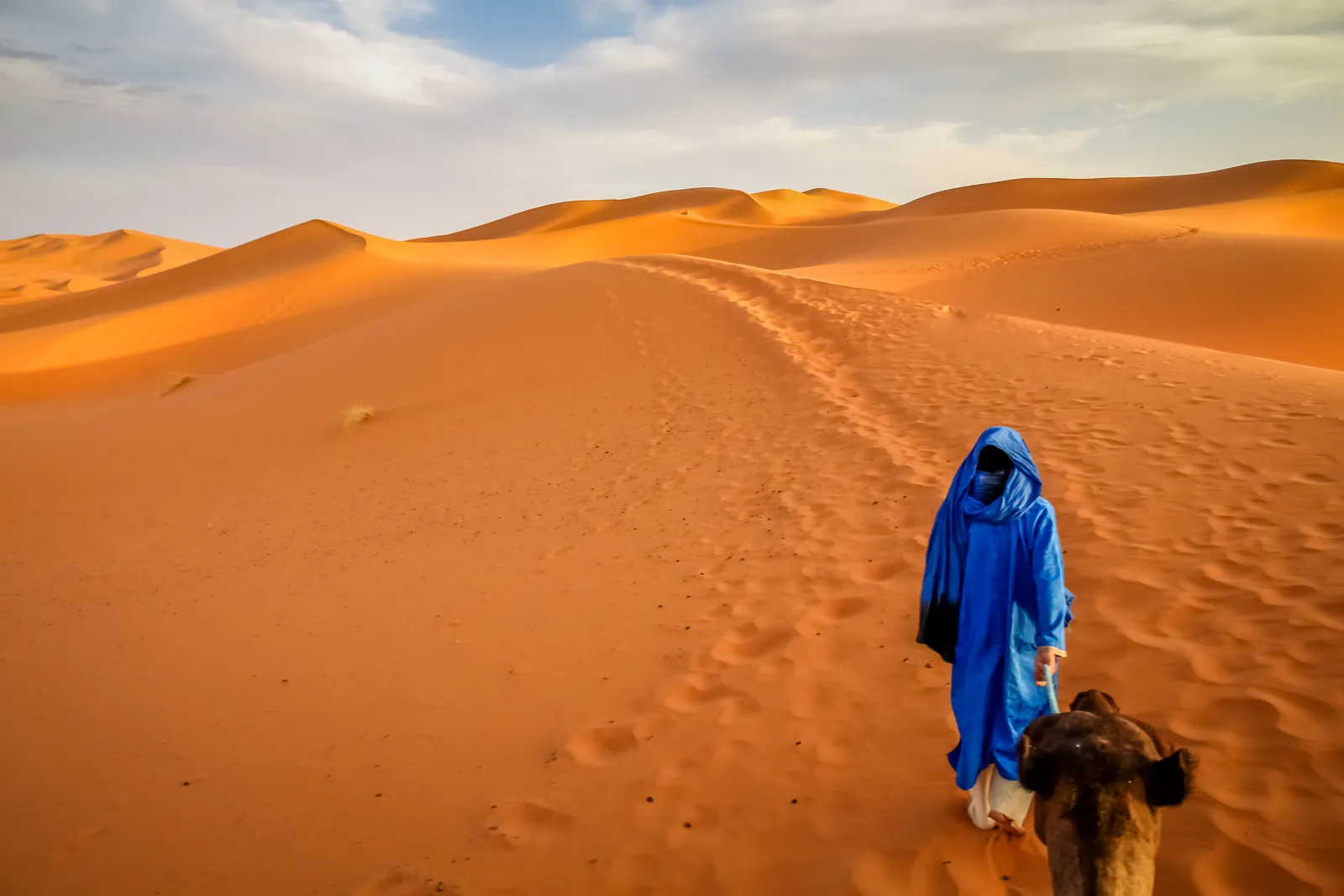
Merzouga is the main gateway to the Erg Chebbi dunes, where visitors come to enjoy camel rides, desert camps, sandboarding, quad biking, and sunset views.
Camel Trek and Desert Camp
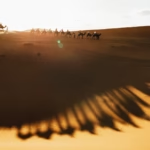
Many itineraries arrive in Merzouga during the afternoon, allowing time for a camel trek before sunset.
The ride into the dunes generally takes around one to one and a half hours, depending on the camp location and the pace of the group. Along the way, there is usually time to stop for photographs and enjoy the changing colours of the sand.
At the camp, guests can enjoy a traditional Moroccan dinner, tea, music, and an evening beneath the desert sky.
Day 3: Merzouga and the Sahara
Sunrise over Erg Chebbi
A desert sunrise is one of the most memorable parts of a Merzouga trip.
Many visitors wake early and climb a nearby dune to watch the first light spread across the sand. The colours change quickly as the sun rises, so it is worth arriving at the viewpoint before sunrise.
Afterwards, you can return to camp for breakfast before continuing with the day’s activities or beginning your onward journey.
Khamlia and Gnaoua Music
If your schedule allows, consider visiting Khamlia, a small village near Merzouga.
Khamlia is known for its Gnaoua music, a traditional style with deep roots in sub-Saharan African culture. A short visit can offer an interesting insight into the cultural history of the region.
4×4 Excursions and Sandboarding
Some travelers add a short 4×4 excursion around the Erg Chebbi dunes or try sandboarding on the larger dunes.
These activities are easy to include when the itinerary allows extra time. They are particularly suitable for travelers spending more than one night in Merzouga.
Staying a Second Night
If you have the time, staying a second night in Merzouga allows you to enjoy the desert without rushing.
You may choose to take a second camel ride, arrange a 4×4 tour, visit nearby villages, or simply spend more time enjoying the dunes and the atmosphere of the Sahara.
How Far Is Marrakech from Merzouga?
The road distance between Marrakech and Merzouga is approximately 560 kilometres, or around 350 miles.
The journey takes longer than the distance might suggest because the route crosses the High Atlas Mountains and follows winding roads through valleys and rural areas.
How Long Does the Journey Take?
Driving without extended stops takes approximately 9 to 10 hours. However, completing the route in one day is tiring and leaves little time to enjoy the places along the way.
For most travelers, two or three days is a better choice:
- Two days: Possible, but with long driving hours and limited time at the main stops
- Three days: The most balanced option for seeing the mountains, kasbahs, gorges, and desert
- Four days or more: A more relaxed journey with additional time in the Dades Valley, Todra Gorge, or Merzouga
Best Stops Between Marrakech and Merzouga
Aït Ben Haddou
A UNESCO-listed fortified village and one of the most recognisable landmarks on the route.
Ouarzazate
A useful stop for lunch, a break, and visits to nearby film-related sites.
Skoura
A palm oasis surrounded by kasbahs and traditional agricultural landscapes.
Dades Valley
A scenic overnight stop known for red cliffs, rock formations, and mountain views.
Todra Gorge
A dramatic limestone canyon that is ideal for a short walk and photographs.
Erfoud
A good place to learn about the region’s fossil industry and geology.
Merzouga and Erg Chebbi
The main destination for experiencing the Sahara, with camel rides, desert camps, sandboarding, and sunset views.
What Is the Best Route?
The most popular and scenic route from Marrakech to Merzouga passes through:
Marrakech → Tizi n’Tichka Pass → Aït Ben Haddou → Ouarzazate → Dades Valley → Todra Gorge → Erfoud → Merzouga
This route combines mountain scenery, historic architecture, valleys, gorges, and the dunes of Erg Chebbi.
Some shorter itineraries visit Zagora instead of Merzouga. Zagora is closer to Marrakech, but the dunes around Erg Chebbi are generally taller and offer a different desert experience.
Best Time to Travel from Marrakech to Merzouga
Spring and Autumn
March to May and September to November are usually among the most comfortable months for this journey.
Days are generally warm without being too hot, while evenings can be cool in the mountains and desert.
Summer
June to August can be very hot, especially around Merzouga. Tours still operate, but outdoor activities are usually more comfortable in the early morning and late afternoon.
Bring water, sun protection, and lightweight clothing.
Winter
December to February brings cooler days and cold nights in the desert. Temperatures may fall close to freezing at night, particularly in the desert camps.
Warm layers are essential, and snow or poor weather can occasionally affect higher mountain roads.
What to Pack
- Lightweight layers for changing temperatures
- A warm jacket for the desert evening
- Comfortable walking shoes for Aït Ben Haddou and Todra Gorge
- Sunglasses and sunscreen
- A scarf or head covering for the desert
- A camera or phone with enough battery
- A small overnight bag for the desert camp
- Any essential medication
- Reusable water bottle
Larger luggage usually remains in the vehicle during the camel trek, so a small overnight bag is more practical for the desert camp.
Private Tour, Shared Tour, or Self-Drive?
Private Tour
A private tour gives you your own vehicle, driver, and flexible schedule.
You can adjust the timing, spend longer at places that interest you, and travel at a more comfortable pace. It can also offer good value for couples, families, and small groups travelling together.
Shared Tour
A shared tour is often a practical option for solo travelers or those travelling on a tighter budget.
The trade-off is a fixed itinerary, shared vehicle, and less flexibility with stops and timing.
Self-Drive
Driving yourself is possible, especially for travelers who are comfortable with long distances and mountain roads.
However, the Tizi n’Tichka Pass includes winding sections, and some parts of the route are remote. A local driver also brings useful knowledge about road conditions, timing, viewpoints, restaurants, and places that are easy to miss when driving alone.
Frequently Asked Questions
Is Marrakech to Merzouga worth the journey?
Yes, for most travelers. The journey is not simply a transfer between two destinations. It takes you through the Atlas Mountains, historic kasbahs, palm oases, dramatic valleys, and the Sahara.
The route is a major part of the experience.
How many days do I need?
Three days is the most practical minimum for a balanced trip.
Two days is possible, but the driving days are longer and there is less time to enjoy each stop. Four or more days allows you to slow down and spend more time around the Dades Valley, Todra Gorge, and Merzouga.
Can I travel from Marrakech to Merzouga in two days?
Yes, but it is a compressed itinerary. You should expect long driving hours and limited time at some stops.
It can work for travelers with limited time, but three days usually provides a much more enjoyable experience.
Is three days enough?
For many travelers, yes. A three-day itinerary can include:
- The Tizi n’Tichka Pass
- Aït Ben Haddou
- Ouarzazate
- The Dades Valley
- Todra Gorge
- A camel trek in Merzouga
- An overnight stay in a desert camp
The schedule will be active, but it does not need to feel rushed if the route is well planned.
Can I finish in Fès instead of returning to Marrakech?
Yes. Continuing from Merzouga to Fès is a popular one-way option and avoids returning along the same route.
The journey passes through the Ziz Valley, the Middle Atlas Mountains, and Ifrane before reaching Fès. It also connects the desert with a completely different part of Morocco.
Can I visit Merzouga without taking a camel ride?
Yes. A camel ride is a popular way to reach many desert camps, but other options may be available depending on the camp and itinerary, including 4×4 transfers.
If you prefer not to ride a camel, mention this when booking so suitable arrangements can be discussed.
Is the road from Marrakech to Merzouga safe?
The route is regularly travelled, but it includes mountain roads, winding sections, and long distances between some towns.
Traveling with an experienced local driver can make the journey more comfortable and helps with route planning, weather conditions, and safe timing.
Should I book a private or shared tour?
A private tour is usually the better choice if you value flexibility, comfort, and personal attention.
A shared tour can be more affordable, particularly for solo travelers, but follows a fixed schedule and shared itinerary.
Book Your Marrakech to Merzouga Journey
Ready to experience the High Atlas Mountains, ancient kasbahs, dramatic valleys, and the Sahara?
Explore our current tour options:
- 3-Day Marrakech to Merzouga Desert Tour
- 4-Day Marrakech to Merzouga Desert Tour
- Contact us to create a custom itinerary
Visit the tour pages for current pricing, availability, inclusions, and booking details.