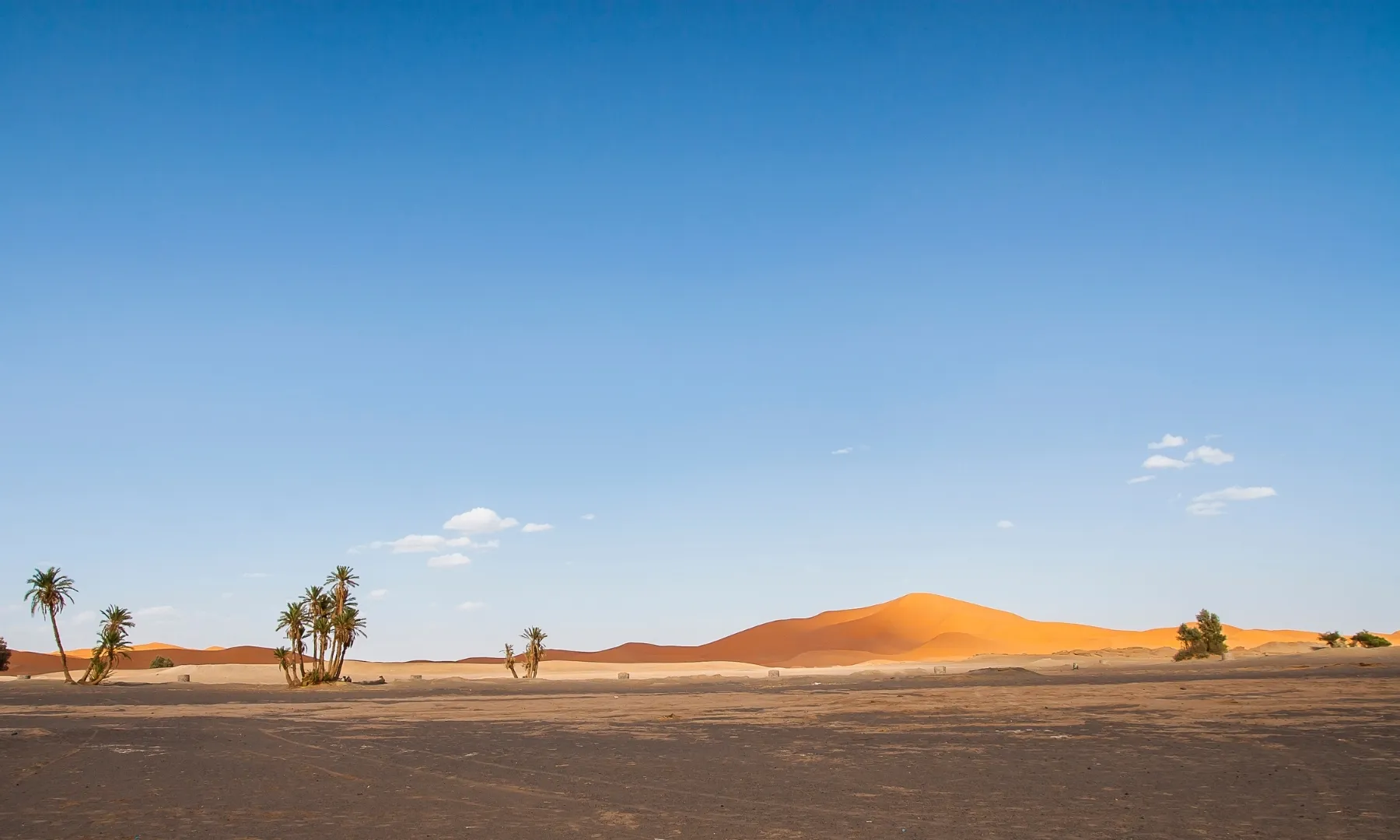
Planning a Morocco 5-day itinerary and not sure where to start? Five days is enough to ride a camel into the Sahara at sunset, walk through a 17th-century UNESCO kasbah, get lost in the souks of Marrakech and cross the High Atlas Mountains — as long as the route is planned properly.
We are Morocco Desert Discovery, a local team of Berber guides and drivers based in the south. We drive these roads, sleep in these desert camps and host travellers on this exact route every week. This is the 5-day itinerary we actually recommend to our guests — the stops that matter, the honest drive times most guides leave out, and the small local tips that turn a good trip into an unforgettable one.
Prefer to skip the planning? Tell us your dates and we will build your private 5-day route for you — WhatsApp +212 667 495 734.
Is 5 Days Enough to See Morocco?
Yes — if you focus. Morocco is a big country and the temptation to add “just one more city” is real, but a tightly planned five days gives you the full range of what makes Morocco unforgettable: imperial Marrakech, High Atlas scenery, a UNESCO kasbah, dramatic gorges and a night under the stars in the Sahara.
What you can comfortably do in 5 days: explore Marrakech, cross the High Atlas, visit Ait Ben Haddou, drive the Dades and Todra Gorges, and sleep in a desert camp at Merzouga.
What you can’t realistically do in 5 days: add Fes and Chefchaouen to the same trip. For that you want 9–10 days — see our longer Morocco tours from Marrakech. For now, let’s make five days count.
Your 5-Day Morocco Itinerary at a Glance
Here is the full route with real drive times — because you deserve to know what you are actually signing up for before you go.
| Day | Route | Highlights | Drive time |
|---|---|---|---|
| 1 | Arrive Marrakech | Koutoubia, Bahia Palace, souks, Djemaa el-Fna | — |
| 2 | Marrakech → Ait Ben Haddou → Ouarzazate | Tizi n’Tichka pass, UNESCO kasbah, Atlas Film Studios | ~4 hrs |
| 3 | Ouarzazate → Dades & Todra → Merzouga | Rose Valley, 300 m gorge walls, Erg Chebbi dunes, sunset camel ride | ~5–6 hrs |
| 4 | Merzouga — full Sahara day | Sunrise over the dunes, sandboarding, Khamlia music, stargazing | Rest day |
| 5 | Merzouga → Draa Valley → Marrakech | Valley of a Thousand Kasbahs, final Marrakech evening | ~8–9 hrs |
Local tip: these times assume private transport. Public buses and shared taxis take far longer — sometimes double. A private tour with a driver removes the stress and lets you stop wherever the view demands it.
Day 1 — Arrive in Marrakech: Medina, Souks & Djemaa el-Fna
Your trip begins in Marrakech, and there is no softer landing into Morocco. The city is loud, colourful, slightly disorientating and completely brilliant. Give yourself the afternoon and evening to settle in and let it pull you in.
Morning: Koutoubia Mosque & Bahia Palace
Start gently at the Koutoubia Mosque, the most iconic landmark in Marrakech. Non-Muslims can’t enter, but the surrounding gardens are your first proper look at Moroccan architecture. From there, walk to the Bahia Palace — the carved cedar ceilings and mosaic courtyards will stop you mid-step. Budget two to three hours and don’t rush.
Afternoon: Souks, Majorelle Garden & a Hammam
After lunch on a medina rooftop, dive into the souks. The medina is a UNESCO World Heritage Site and one of the largest in the world — each quarter has its own trade: leather, spices, textiles, metalwork. Walk without a destination; getting lost is the point. For calm before dinner, head to the electric-blue Majorelle Garden, later owned by Yves Saint Laurent. End the day with a traditional hammam — a cornerstone of Moroccan life and the best thing you can do after a travel day.
Evening: Djemaa el-Fna
As the sun sets, Djemaa el-Fna transforms from a market into a festival — storytellers, Gnaoua musicians and dozens of food stalls filling the air with smoke and spice. Eat here: harira soup, lamb skewers, fresh orange juice. Sit on a terrace above the square with mint tea and watch it unfold. This is your welcome to Morocco.
Where to stay, Night 1: a riad inside the medina walls near Riad Zitoun or Bab Doukkala — central, authentic and full of character. Ask us and we’ll point you to trusted riad partners.
Day 2 — High Atlas, Ait Ben Haddou & Ouarzazate
Today the landscape changes completely. Leave Marrakech by 8 am and drive south over the High Atlas through the Tizi n’Tichka pass at 2,260 metres — arguably the most spectacular drive in the country. Prefer to sample the mountains on a shorter trip first? Our Atlas Mountains day trip is a great standalone.
Ait Ben Haddou — UNESCO Kasbah
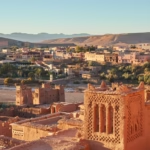
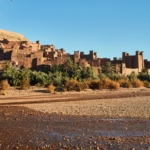
Ait Ben Haddou is one of the most photographed places in Morocco. This fortified ksar above the Ounila River has stood in for Gladiator, Game of Thrones and Lawrence of Arabia, but the real draw is its age — parts date to the 17th century. Allow 1.5–2 hours to cross the river, climb to the summit and take in the palm groves below. A local guide at the entrance makes the history come alive.
Ouarzazate — Morocco’s Hollywood
Forty minutes on, Ouarzazate is Morocco’s film capital. The Atlas Film Studios — the largest in Africa — are worth an hour before you check in for the night.
Where to stay, Night 2: a kasbah-style guesthouse in or near Ouarzazate, most with a pool to cool off after the drive.
Day 3 — Dades & Todra Gorges, then the Sahara
The longest driving day — roughly five to six hours with stops — but every kilometre earns its place. Leave Ouarzazate by 8 am and head deep into the pre-Saharan south toward the dunes of Erg Chebbi.
The Rose Valley & Valley of a Thousand Kasbahs
The Dades Valley runs east from Ouarzazate past ancient kasbahs perched on rocky outcrops and green oases threading the riverbed. In spring the Rose Valley around Kelaat M’gouna blooms with damask roses used for rose water — a far more authentic souvenir than anything in the tourist souks.
Todra Gorge
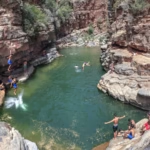
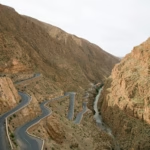
The Todra Gorge is one of Morocco’s great natural spectacles: limestone walls rising 300 metres, pressing in to just 10 metres wide at the narrowest point. Walk 30–45 minutes with the cold river at your feet — arrive before the midday crowds and it’s largely yours.
Arriving in Merzouga
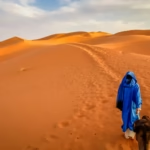
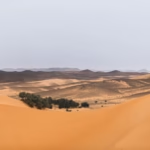
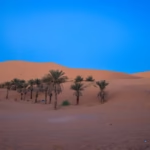
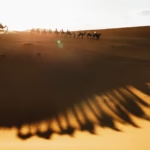
By late afternoon the dunes of Erg Chebbi appear on the horizon — a wall of orange and gold rising 150 metres from the flat plain. Check in, then ride a camel into the dunes for sunset. Dinner is tagine and Berber bread around the fire, with the stars appearing one by one. Sleep in a traditional Berber tent — this quietly becomes the memory of the whole trip. Our 3-day Merzouga tour and 4-day Sahara tour both cover this exact stretch.
Day 4 — A Full Day in the Sahara
Today belongs entirely to the desert. Giving Merzouga a full day rather than a rushed half-day is one of the best decisions you’ll make on this trip.
Sunrise over Erg Chebbi
Wake before dawn. The sand shifts from deep purple to orange to burning gold in twenty minutes. Bring a camera, but watch it with your own eyes first. Breakfast follows at camp — strong coffee, bread, honey and argan oil.
Sandboarding, 4×4 & the village of Khamlia
Once the day heats up, try sandboarding or a 4×4 run to the quieter far side of the dunes. In the afternoon, drive to Khamlia, home to a community of Gnaoua musicians whose trance-like rhythms are unlike anything else in Morocco. Stay for tea and a performance — one of the most authentic experiences on this route.
Stargazing
After dinner, look up. With near-zero light pollution the Milky Way is visible to the naked eye, and your guide can point out the same stars Berber caravans used to cross the desert. This is what people can’t stop talking about when they get home.
Day 5 — Return to Marrakech
The last day is the long, beautiful return drive to Marrakech (about 8–9 hours) through the Draa Valley and the Valley of a Thousand Kasbahs, arriving in time for an evening or next-morning flight. If you’d rather not do it in one push, we can split the return with a night in the Draa Valley — just ask.
Prefer to End in Fes Instead?
Many travellers use the same first four days but finish in Fes rather than returning to Marrakech — perfect if you’re flying out of the north. That’s our 5-day Marrakech to Fes desert tour. Want a slower pace with more time in the gorges and the desert? The 6-day desert tour from Marrakech adds a day where you’ll feel the difference most.
Best Time of Year for a 5-Day Morocco Trip
Spring (March–May) and autumn (September–November) are ideal: warm days, cool desert nights, roses in bloom in the Dades. Summer is very hot in the south — start early and rest at midday. Winter days are pleasant but desert nights are genuinely cold, so pack layers. The route runs all year with a good camp and a good driver.
What to Pack for 5 Days in Morocco
- Layers — warm days and cold desert nights, even in spring
- A scarf or shawl (sun, dust, and for the dunes)
- Comfortable closed shoes for the kasbah and gorge walks
- Sunscreen, sunglasses and a hat — the southern sun is strong
- Cash in dirhams for small stops, tips and village purchases
- A light daypack for the desert overnight (your main bag stays in the vehicle)
- A power bank — camps have limited electricity
10 Insider Tips from Our Local Guides
- Leave Marrakech early on Day 2 — the Atlas pass is best before the coaches.
- Todra Gorge before 10 am — you’ll have the canyon nearly to yourself.
- Do the sunset camel ride, but the sunrise is better — and far quieter.
- Carry cash — card machines are rare once you leave Marrakech.
- Dress in layers for the desert — nights drop fast after sunset.
- Buy rose water in Kelaat M’gouna, not in the Marrakech souks.
- Tip generously and specifically — hand it to the person, not a jar.
- Trust your guide over the map app — mountain roads and shortcuts don’t always show.
- Eat where the locals eat — the busiest food stall on Djemaa el-Fna is busy for a reason.
- Don’t over-schedule Day 1 — arrival day is for slowing down, not sightseeing sprints.
Let Us Handle the Driving
This route is beautiful, but the days are long and the roads are mountainous. On a private tour with a local driver-guide, you sit back, stop wherever you like, and travel with someone who grew up on these roads and knows every camp owner by name. Browse all our Morocco tours and day trips from Marrakech, or message us and we’ll tailor the route to your dates.
Frequently Asked Questions
Is 5 days enough for Morocco?
Yes. Five days is enough to combine Marrakech, the High Atlas, Ait Ben Haddou, the Dades and Todra Gorges and a night in the Sahara at Merzouga — as long as you follow one focused route instead of trying to add Fes or Chefchaouen.
What is the best route for a 5-day Morocco itinerary?
The classic loop from Marrakech: Day 1 Marrakech, Day 2 over the Tizi n’Tichka pass to Ait Ben Haddou and Ouarzazate, Day 3 through the Dades and Todra Gorges to Merzouga, Day 4 a full day in the Sahara, and Day 5 the return drive to Marrakech.
Do I need a guide or driver for 5 days in Morocco?
For this route, strongly recommended. The days involve long mountain drives and remote desert tracks. A private driver-guide handles the logistics, knows the best stops and timings, and turns the drive itself into part of the experience.
What is the best time of year to visit Morocco for 5 days?
Spring (March–May) and autumn (September–November) are best — warm days and cool nights. Summer is very hot in the south, and winter desert nights are cold, so pack layers whenever you travel.
Can I reach the Sahara desert in a 5-day Morocco itinerary?
Yes. This itinerary reaches the Erg Chebbi dunes at Merzouga, with a sunset camel ride, a night in a Berber camp and a full day in the desert — the real Sahara, not a substitute.
Can I start from Casablanca or end in Fes instead?
Yes. The same core route works ending in Fes (our 5-day Marrakech to Fes tour) or starting from Casablanca. Tell us your arrival and departure cities and we’ll adjust the plan to fit your flights.